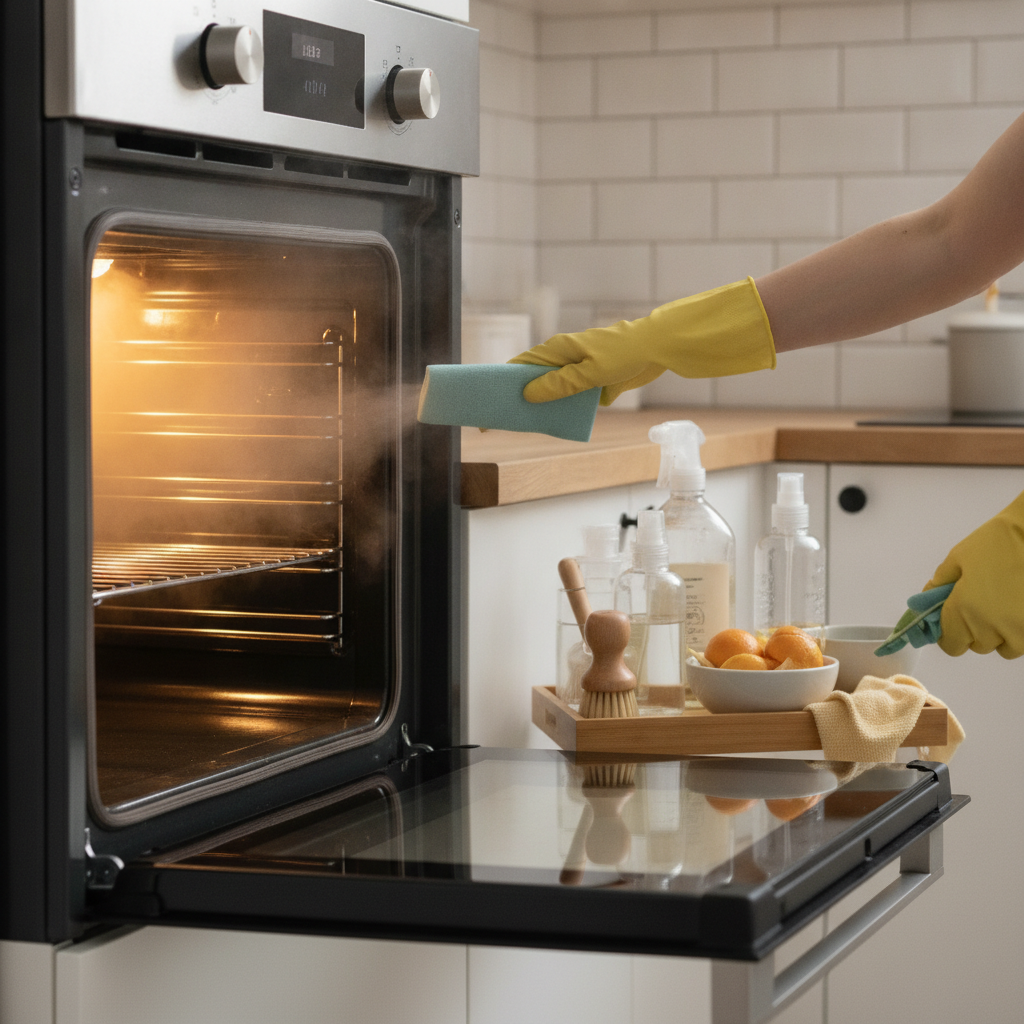
Why Does My Oven Smell Like Burnt Food or Grease?
Few things are as unappetising as opening your oven door only to be hit by a foul smell. Whether it's a persistent burnt food smell oven, a rancid grease aroma, or an unidentified stale odour, a smelly oven can ruin mealtime and even pose health concerns. Many residents across Glasgow often ask us, "why does my oven smell?" The answer usually lies in the accumulation of food spills, grease, and carbonised residues that build up over time. Understanding the root causes is the first step towards a fresh, clean, and efficient cooking environment.
The most common culprit behind unpleasant oven odours is undoubtedly carbonised food debris. Every time a spillage occurs – a splash of sauce, a drip of cheese, or an overflow from a baking dish – it hardens and burns onto the oven surfaces. With each subsequent use, these remnants are reheated, further charring and releasing strong, often acrid, odours into your kitchen. This is the classic burnt food smell oven that can quickly permeate your entire home.
Beyond obvious spills, grease build-up plays a significant role. Over time, fats and oils from cooking vapourize and condense on the oven's interior walls, racks, and even the fan. This grease, especially if left uncleaned, can become rancid. When heated, it produces a distinct, unpleasant smell that can transfer to your food, spoiling its taste and aroma. This fatty residue is also highly flammable, making a dirty oven a potential fire hazard. According to fire safety experts, accumulated grease and food particles are a leading cause of kitchen fires, underscoring the importance of regular cleaning.
Furthermore, an unclean oven creates a breeding ground for bacteria and mould, particularly in humid environments or if food is left to fester. While less common, these microscopic organisms can contribute to musty or sour smells, especially if the oven hasn't been used in a while. The combination of these factors – burnt food, rancid grease, and potential microbial growth – results in the myriad of odours that prompt homeowners to seek solutions for how to remove oven odour effectively.
What Are Other Common Sources of Unpleasant Oven Odours?
While burnt food and grease are the primary offenders, several other factors can contribute to a malodorous oven, often overlooked by the average homeowner. Understanding these less obvious sources can help you pinpoint the exact problem and find the right solution.
- Rancid Grease and Oil Build-up: As mentioned, grease isn't just an aesthetic issue. When fats and oils are heated repeatedly, they break down and can emit a truly foul, almost sour smell. This is particularly prevalent in ovens used frequently for roasting or frying. The grease can seep into various crevices, making it challenging to remove without professional tools.
- Chemical Residues from DIY Cleaning: Sometimes, the smell isn't from food but from previous cleaning attempts. Harsh chemical cleaners, especially those not thoroughly rinsed or ventilated, can leave behind strong, lingering odours that become more pungent when the oven heats up. These fumes can be irritating and even harmful to inhale, especially when cooking.
- New Oven 'Burn-Off' Smell: If you've recently purchased a new oven, you might notice a strange, plastic-like smell during its first few uses. This is typically due to the burning off of manufacturing oils, insulation, and protective coatings. While usually harmless and temporary, it's essential to follow the manufacturer's instructions for the initial 'burn-in' process, which often involves running the oven at a high temperature for a period in a well-ventilated area.
- Pest Infestation: Although rare, rodents or insects can sometimes find their way into an oven, particularly if it's stored or hasn't been used for an extended period. Their droppings or carcasses can create incredibly foul, persistent smells. If you suspect a pest issue, professional pest control is necessary before any cleaning.
- Mould and Mildew: In ovens that are rarely used or in humid conditions, mould and mildew can develop, especially if there's any residual moisture or food particles. These fungi produce a distinct musty odour that can be particularly strong when the oven is first heated.
- Damaged Oven Seals: Worn or damaged oven door seals can lead to heat leakage and inefficient cooking. While not directly a source of odour, they can indirectly contribute by allowing fumes and smoke to escape into the kitchen more easily, making any internal oven smell more noticeable.
Each of these issues requires a specific approach to eliminate the odour completely. While some can be addressed with careful DIY, the stubborn nature of many of these residues often points towards the need for a thorough, professional intervention.
Can a Smelly Oven Affect My Food's Taste and Your Health?
Absolutely. The impact of a dirty, smelly oven extends beyond just an unpleasant aroma. It can significantly compromise the quality of your cooking and potentially affect the health of your household. This is a critical point for many busy Glasgow families who rely on their ovens daily.
Firstly, the most immediate effect is on your food's taste. When strong odours like burnt carbon or rancid grease emanate from your oven, they don't just stay within the oven cavity; they infuse into your dishes. Imagine baking a delicate cake or roasting a succulent chicken, only for it to come out tasting faintly of last week's burnt pizza or stale oil. This flavour transfer can ruin even the most carefully prepared meals, making them unappetising and wasteful.
Secondly, a smelly oven can impact your indoor air quality. When food particles and grease carbonise, they release smoke and volatile organic compounds (VOCs) into your kitchen and home. These fumes can be irritating to the eyes, nose, and throat. For individuals with respiratory conditions like asthma or allergies, exposure to such smoke and particulate matter can trigger symptoms. Repeated exposure to these fumes, particularly from extensively burnt food, has been a subject of health studies, indicating potential long-term risks, although professional cleaning can drastically mitigate this.
Moreover, the smoke point of oils and fats is lowered in a dirty oven due to the presence of carbonised residues. This means even at regular cooking temperatures, you're more likely to generate excessive smoke and fumes, contributing to poorer air quality and a more noticeable smell throughout your home. A clean oven, conversely, allows for more efficient cooking with less smoke and fewer harmful byproducts.
Finally, a dirty oven is a less hygienic cooking environment. While the high temperatures generally kill bacteria, the constant presence of burnt food and grease can attract pests, create unhygienic conditions, and simply feels less safe for preparing food for your loved ones. Prioritising a clean oven is not just about aesthetics; it's about food safety, air quality, and ensuring that every meal you prepare is as delicious and healthy as possible.
How Can I Remove Oven Odour Effectively?
When faced with an oven odour, many people first attempt DIY solutions. While some methods can offer temporary relief for minor issues, persistent and deep-seated odours often require a more robust approach. Here's a look at common strategies and why professional intervention is often the best long-term solution to remove oven odour.
DIY Methods (Limited Effectiveness for Deep Odours):
- Baking Soda and Vinegar Paste: A mixture of baking soda and water, applied as a paste, can help absorb odours and break down some grease. After letting it sit for several hours or overnight, you can scrub and wipe it away, followed by a spray of white vinegar for added cleaning power and odour neutralisation.
- Lemon Water: Placing a bowl of water with lemon slices or juice in the oven and heating it can release steam that helps loosen grime and leaves a fresh, citrusy scent. This is more of a deodorising method than a deep clean.
- Activated Charcoal: Leaving a bowl of activated charcoal in a cool oven overnight can help absorb some lingering smells, but it won't address the source of the odour.
- Self-Cleaning Function: Many modern ovens come with a self-cleaning feature that uses extremely high temperatures to burn off food residues. While effective for some grime, this process generates intense heat and smoke, often creating a very strong, burnt smell during the cycle. It can also be very taxing on the oven's components and may not reach every nook and cranny. Many manufacturers now advise caution with using this function due to potential damage and fire risks.
While these DIY methods can offer some relief for light surface dirt or minor smells, they often fall short when dealing with stubborn, caked-on carbon, rancid grease that has seeped into the oven's deeper layers, or odours from neglected parts like the fan or elements. The reason is simple: household cleaners and tools are not designed to tackle the extreme build-up that accumulates over months or years of cooking.
Why Choose Professional Oven Cleaning Glasgow?
For residents across Glasgow, including areas like Bearsden, Newton Mearns, Shawlands, and beyond, the most effective and hassle-free way to truly remove oven odour and restore your appliance to its pristine condition is to opt for a professional oven clean. Glasgow Oven Cleaners offers a premium service that goes far beyond what any DIY effort can achieve, ensuring a sparkling clean, odour-free oven every time.
Unmatched Deep Cleaning Expertise:
Our expert technicians are trained specifically in advanced oven cleaning techniques. We meticulously dismantle removable parts – including oven racks, fan covers, and even the oven door glass – to ensure every surface is treated. This allows us to reach hidden crevices and stubborn build-up that are inaccessible during a standard home clean. We understand the intricacies of all oven types, from standard electric and gas models to complex range cookers and specialist AGA ovens.
Specialised Equipment and Eco-Friendly Products:
At Glasgow Oven Cleaners, we utilise industrial-grade, purpose-built dip tanks where racks and other removable components are soaked in a powerful, yet eco-friendly, non-toxic cleaning solution. This process safely dissolves years of baked-on grease and carbon without damaging the parts. Our internal cleaning solutions for the oven cavity are also non-caustic, fume-free, and biodegradable, ensuring a safe environment for your family and pets immediately after the clean. You won't be left with any harsh chemical smells, only the fresh scent of a truly clean appliance.
Health, Safety, and Efficiency Benefits:
A professional oven clean from Glasgow Oven Cleaners eliminates the source of those burnt food smell oven issues, significantly improving your kitchen's air quality. By removing all carbonised food and rancid grease, we reduce the risk of smoke emission and potential fire hazards. A clean oven also operates more efficiently. Research indicates that a clean oven can distribute heat more evenly, potentially reducing cooking times and even saving energy, as it doesn't have to work as hard to reach and maintain desired temperatures. This can be a tangible benefit for busy Glasgow households.
Comprehensive Service for All Your Cooking Appliances:
Our expertise isn't limited to just the oven interior. We also provide professional cleaning for:
- Hobs: Gas, electric, and induction hobs are meticulously cleaned, removing food spills and grease.
- Extractors/Hoods: Filters are degreased and housing is shined, improving air circulation and removing lingering cooking smells.
- Microwaves: Interior and exterior cleaning to remove splatters and odours.
Whether you have a standard oven, a large range cooker, a traditional AGA, or a modern microwave, our team has the knowledge and tools to bring them back to near showroom condition. We pride ourselves on delivering a professional oven clean service that restores hygiene, efficiency, and the aesthetic appeal of your entire cooking setup.
Time-Saving and Convenience for Glasgow Residents:
We understand that life in Glasgow is busy. Attempting a deep oven clean yourself is a time-consuming, messy, and often frustrating task. By entrusting your oven to Glasgow Oven Cleaners, you save hours of scrubbing and ensure a superior result without lifting a finger. Our technicians work efficiently, typically completing a full oven clean in just 1-3 hours, leaving you with more time to enjoy our beautiful city.
How Often Should I Get a Professional Oven Cleaned?
The frequency of professional oven cleaning largely depends on how often you use your oven and what you cook. For an average household in Glasgow, we generally recommend the following:
- Moderate Use (1-3 times a week): A professional oven clean every 6-9 months is usually sufficient to prevent significant build-up and maintain hygiene.
- Frequent Use (Daily or multiple times a week): If your oven is a workhorse, especially for roasting, baking, or cooking greasy foods, a quarterly (every 3 months) or bi-annual (every 6 months) deep clean is highly advisable. This proactively prevents the burnt food smell oven from taking hold and keeps efficiency high.
- Light Use (Infrequent): Even if you use your oven sparingly, an annual professional clean is beneficial to prevent dust accumulation, potential mould growth, and to ensure it's ready for those special occasions.
Ultimately, if you notice persistent odours, visible grease, or food carbonisation, it's a clear sign that a professional intervention is due. Regular cleaning not only removes oven odour but also extends the life of your appliance and maintains peak performance.
FAQs About Oven Odours and Cleaning
Q1: Is a smelly oven dangerous?
While an occasional burnt crumb might not be immediately dangerous, a consistently smelly oven, particularly one emitting strong smoke or acrid fumes, can pose several risks. The accumulation of carbonised food and grease is a significant fire hazard. Additionally, the smoke and volatile organic compounds (VOCs) released can degrade indoor air quality and may exacerbate respiratory issues for sensitive individuals. For example, some studies suggest that prolonged exposure to high levels of cooking fumes can negatively impact respiratory health. A professional clean significantly mitigates these risks by removing flammable residues and improving air quality.
Q2: Can I use my oven immediately after a professional clean?
Yes! One of the significant advantages of choosing Glasgow Oven Cleaners is our use of eco-friendly, non-toxic, and fume-free products. Unlike harsh chemical cleaners that require extensive ventilation and a 'burn-off' period, your oven is completely safe to use immediately after our technicians finish. You can cook your next meal with confidence, enjoying the fresh, clean smell and efficient operation.
Q3: How long does an oven cleaning take?
The duration of a professional oven clean varies depending on the type and size of the oven, as well as the extent of the build-up. Generally:
- Standard single oven: 1.5 - 2 hours
- Double oven: 2 - 2.5 hours
- Range cooker: 2.5 - 3.5 hours
- AGA cooker: 3 - 5 hours
Our technicians work efficiently and meticulously to ensure a thorough clean without unnecessary delays, causing minimal disruption to your home in Glasgow.
Q4: What makes your cleaning methods eco-friendly?
Glasgow Oven Cleaners is committed to environmental responsibility and your family's health. Our eco-friendly approach means we primarily use biodegradable, non-caustic, and non-toxic cleaning solutions. These products are safe for your oven's surfaces, safe for the environment upon disposal, and crucially, safe for your home, pets, and children. We avoid harsh chemicals that leave behind strong fumes or residues, ensuring your kitchen remains a healthy and pleasant space.
Summary: Key Takeaways for a Fresh, Odour-Free Oven
Experiencing a persistent oven odour can be frustrating and even concerning. Whether it's the unmistakable burnt food smell oven, the lingering scent of rancid grease, or a mysterious stale aroma, understanding why does my oven smell is the first step towards a solution. The primary culprits are almost always the accumulation of carbonised food spills and baked-on grease, which can affect your food's taste, degrade air quality, and even pose fire risks.
While DIY methods can offer temporary relief for minor issues, they often fall short in tackling the deep-seated grime that truly causes persistent odours. For a truly effective and lasting solution to remove oven odour, a professional oven clean is unparalleled. Glasgow Oven Cleaners provides a comprehensive service using specialised equipment and eco-friendly, non-toxic products to deliver a deep clean that restores your oven to a near showroom condition.
By choosing professional oven cleaning Glasgow, you benefit from:
- Elimination of all burnt food and grease residues.
- Improved air quality and reduced fire hazards.
- Enhanced cooking efficiency and food taste.
- The convenience of a quick, mess-free service.
- Expert care for all oven types, hobs, extractors, and microwaves.
Don't let a smelly oven detract from your cooking experience or compromise your home's hygiene. Trust the experts at Glasgow Oven Cleaners to provide a sparkling clean, odour-free oven, ensuring a healthier and more enjoyable kitchen environment for you and your family across Glasgow and its surrounding areas. Say goodbye to the burnt food smell oven and hello to a fresh, clean culinary space!
Ready to banish those unpleasant oven odours for good? Contact Glasgow Oven Cleaners today to schedule your professional deep clean and experience the difference a truly clean oven makes!