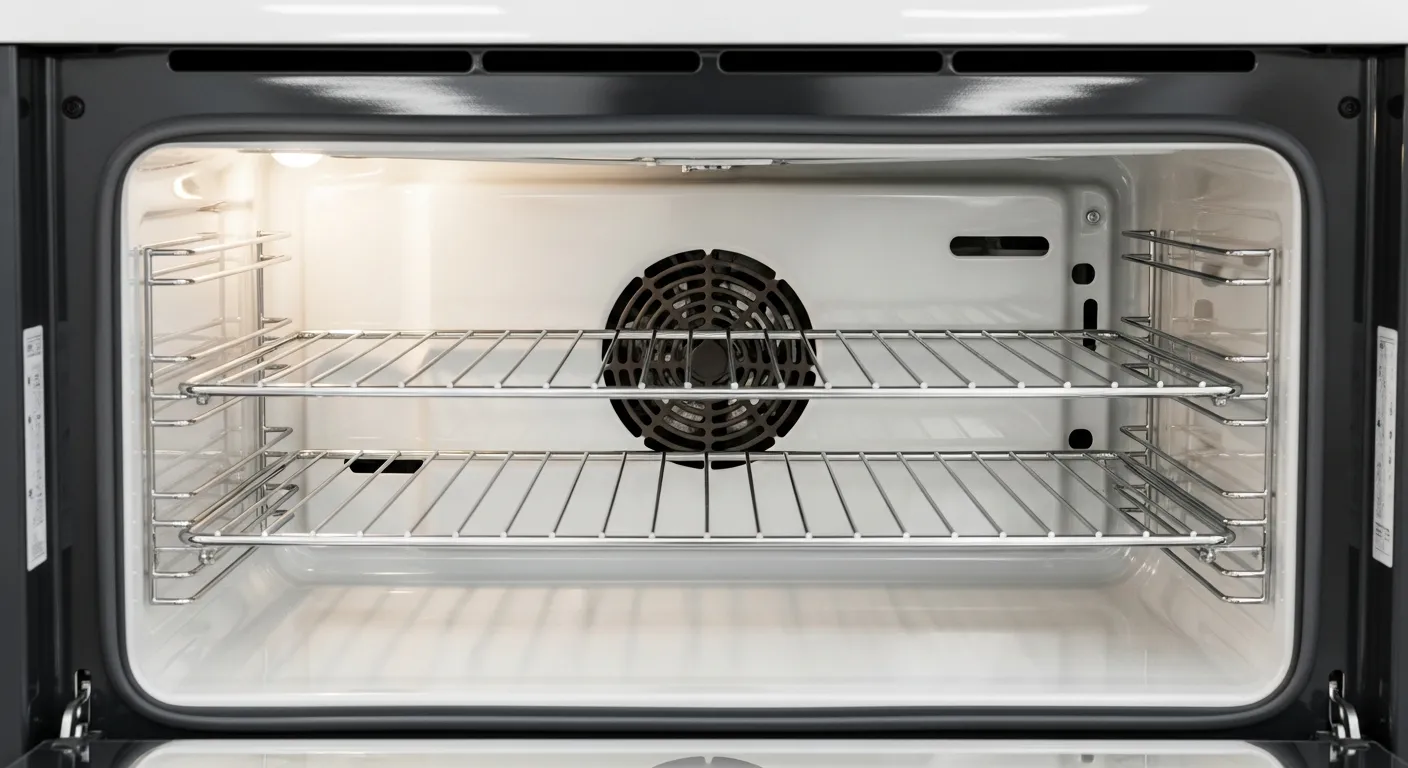
How to Maintain a Clean Oven: Daily Tips & Professional Advice
| Expert Cleaning Team
What is the best way to maintain a clean oven?
The most effective way to maintain a clean oven is to wipe up liquid spills immediately after the appliance cools to prevent stubborn carbonisation. Use a non-stick liner on the bottom rack to catch food debris. Schedule a professional deep clean every 6 to 12 months to ensure optimal energy efficiency and significantly reduce fire risks.
5 Daily Habits for Oven Maintenance
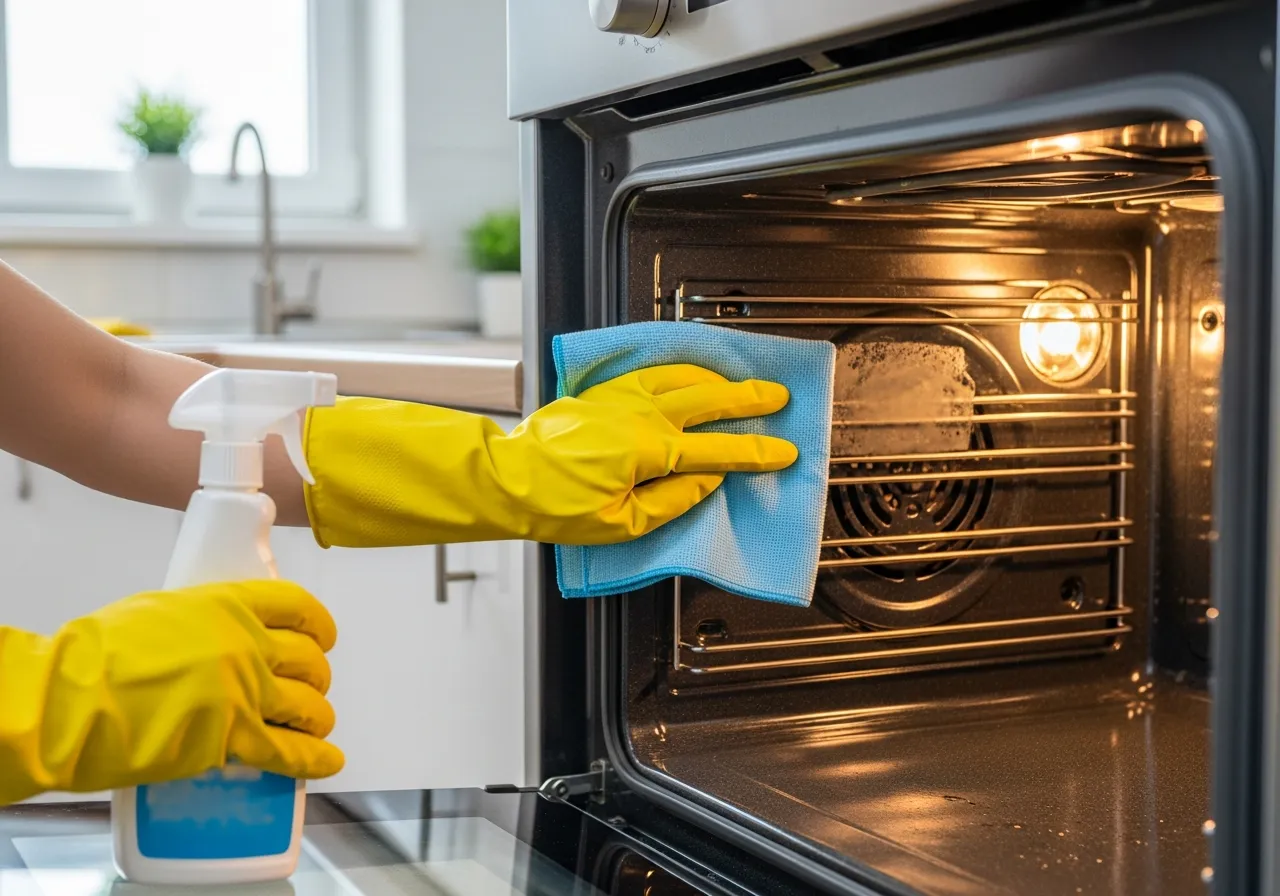
Adopting these simple habits can extend the time between deep cleans by up to 50%.
- Wipe spills immediately: Once the oven is cool to the touch, use a damp microfibre cloth to remove sauce or grease. Sugar-based spills turn to hard carbon if reheated.
- Use an oven liner: Place a professional-grade, PTFE-coated liner on the bottom shelf (not the oven floor) to catch drips. These can be removed and washed in the sink.
- Roast in bags or covered dishes: Reducing splatter is easier than cleaning it. Use roasting bags for meats to contain fat particles.
- Steam clean weekly: Place a heat-proof bowl of water with lemon juice in the oven at 100°C for 20 minutes. The steam softens grease, making it easier to wipe away.
- Inspect seals regularly: Check the rubber door seal for food debris. A compromised seal allows heat to escape, causing the oven to overwork and bake stains onto the glass.
The Science of Burnt-on Carbon
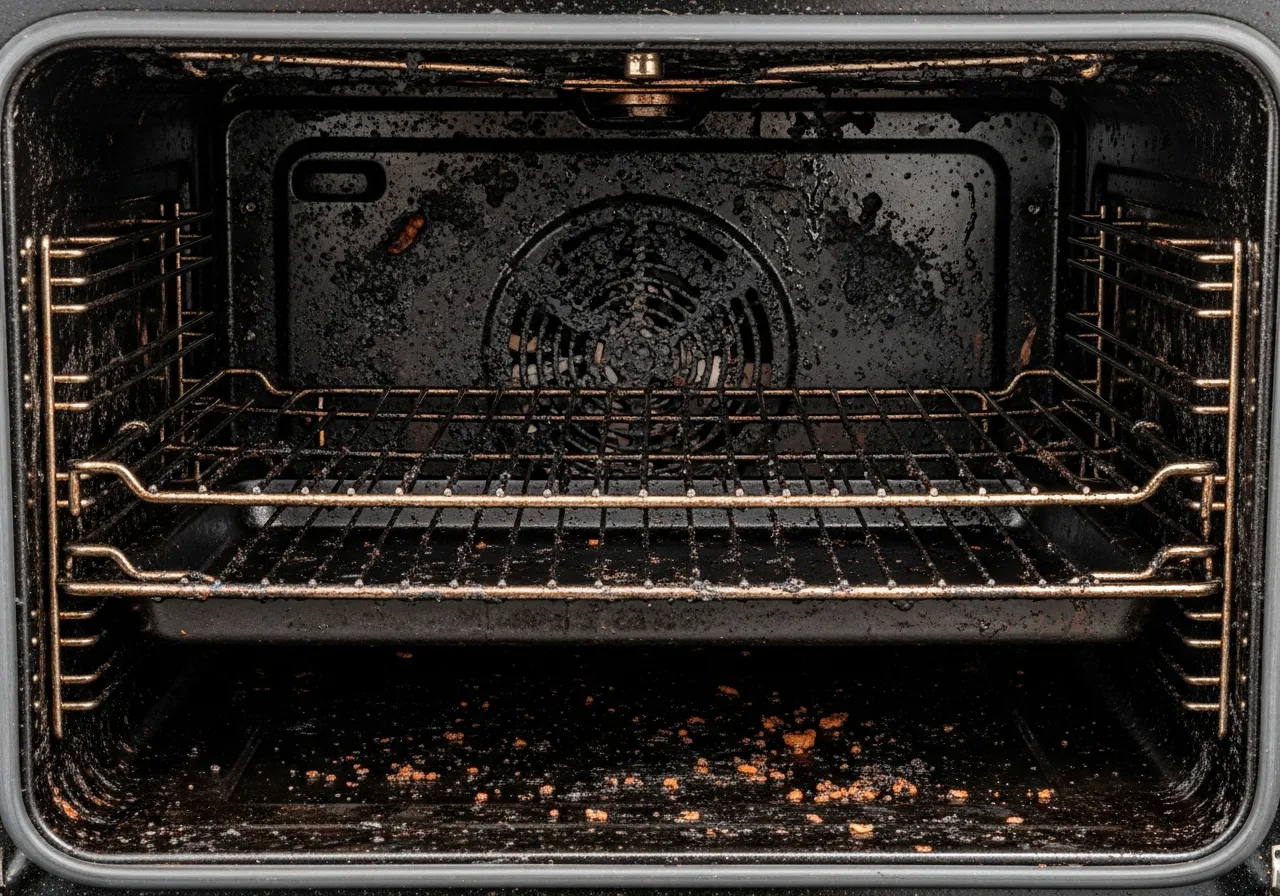
Understanding the chemistry of your oven helps explain why maintenance is critical. When food residue is repeatedly heated, it undergoes a process called carbonisation. This turns soft grease into hard, black carbon deposits that bond to the enamel.
- Energy Inefficiency: Carbon build-up creates an insulating layer. Industry data suggests a dirty oven takes up to 10% longer to reach the desired temperature, increasing your energy consumption.
- Thermostat Accuracy: Heavy carbon deposits can coat the thermostat sensor, leading to inaccurate temperature readings and uneven cooking.
- Fire Risk: Grease has a flash point. Accumulated grease is the leading cause of oven fires in domestic properties.
When to Call a Professional
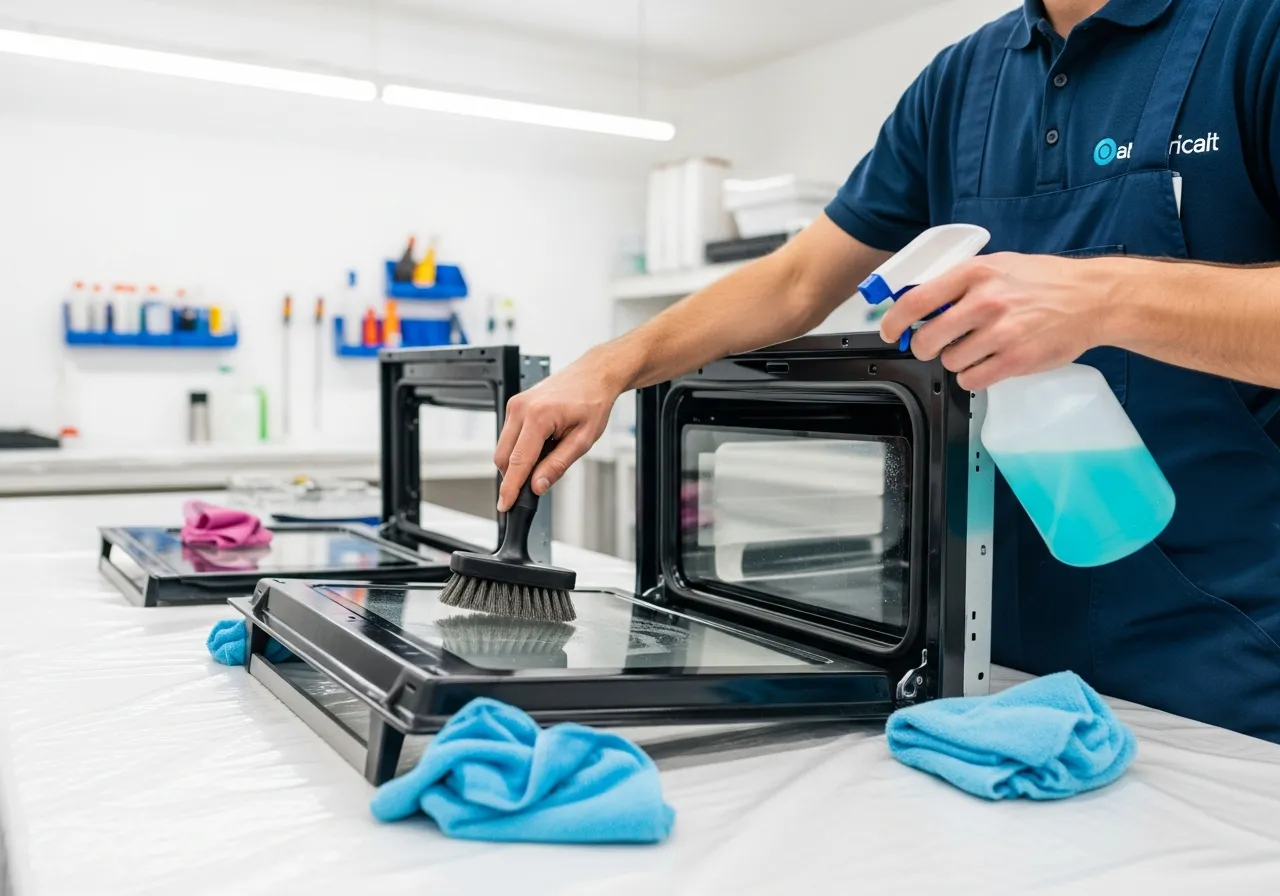
Even with diligent maintenance, internal components like the fan housing and glass door panels accumulate grime that domestic products cannot safely remove. Learn more about what to expect from a professional oven cleaning service.
Is your oven smoking or smelling burnt?
Find a Professional Cleaner Near YouFrequently Asked Questions
What is the best way to maintain a clean oven between professional cleans?
Wipe up spills immediately after the oven cools, use a non-stick liner on the bottom shelf to catch drips, and steam clean weekly with water and lemon juice at 100°C for 20 minutes to soften grease.
Does a dirty oven use more energy?
Yes. Carbon buildup creates an insulating layer inside the oven, meaning it takes up to 10% longer to reach the desired temperature. This increases energy consumption and can also affect thermostat accuracy.